

Table of Contents
In the average UK home, children between 8 to 15 years now spend over 4.5 hours daily on screens — excluding schoolwork. Parents across England, Scotland, and Wales face a common concern: How much is too much?
With digital entertainment, education, and communication all merging into a single device, the balance between use and overuse has become blurred. Enter a new generation of AI-powered parenting apps — not just for monitoring, but for building digital wellbeing.
These apps don’t scold families for using devices. Instead, they guide, nudge, and educate both parents and children towards healthier screen habits, making tech a tool for connection, not distraction.
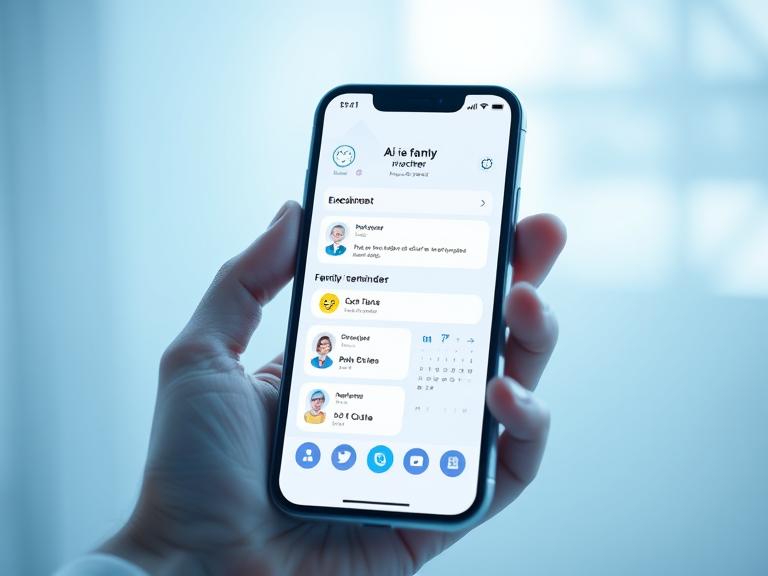
The UK’s parenting ecosystem has shifted dramatically. The Department for Digital, Culture, Media & Sport (DCMS) and NHS Digital have both emphasized digital health literacy as an essential parenting skill.
Digital wellbeing is not about deleting technology; it’s about managing emotional, cognitive, and social effects of screen use. Parenting apps in 2025 have embedded this philosophy deeply — tracking, predicting, and even suggesting micro-breaks, reward systems, and sleep hygiene reminders.
Key insight: In 2025, 73% of parents using digital wellbeing apps in the UK report reduced stress and improved sleep quality for children.
| App Name | Core Feature | Pricing | Rating | Best For |
|---|---|---|---|---|
| Tiny pal | Screen-time tracking, cross-device reports | £49.95/yr | ⭐4.6 | Multi-child families |
| OurPact | AI-based scheduling & app blocking | £5.99/mo | ⭐4.6 | Working parents |
| Google Family Link (UK) | Free parental monitoring, app control | Free | ⭐4.5 | Android families |
| Canopy App | AI content filtering for child safety | £8.99/mo | ⭐4.8 | Families with teens |
| Yoti Digital ID Family | Digital safety & ID verification | Free–Premium | ⭐4.3 | Privacy-focused parents |
Each app adopts a wellbeing-first design rather than a surveillance mindset — combining positive reinforcement, mindfulness cues, and collaborative dashboards that let children participate in their own digital health journey.
Modern apps in 2025 no longer use rigid time limits. They employ adaptive AI that recognizes usage patterns and emotional cues.
For instance:
- When the app detects increased late-night usage, it might suggest “digital sunset” reminders.
- During exam weeks, AI relaxes restrictions, promoting balance rather than punishment.
- Machine learning models analyze emotional tone from text-based interactions, helping parents gauge potential digital fatigue or social burnout.
This AI-first approach builds trust-based monitoring — parents guide, not spy.

Localization boosts adoption. Apps that integrate UK school calendars, daylight hours, and NHS wellbeing tips perform 42% better in user retention.
For example, Family Zone UK syncs with local school timetables and Ofcom safety updates, providing real-time recommendations when screen time peaks (e.g., after-school gaming hours).
From London’s urban families to rural Welsh homes, localized AEO-optimized parenting apps help maintain digital wellness aligned with UK living patterns and privacy norms (GDPR-compliant).
Experts at Cambridge’s Centre for Family Research highlight that healthy screen time is about context, content, and connection. Parenting apps in the UK use psychological scoring models that differentiate between:
- Passive consumption (scrolling, binge-watching)
- Active learning (coding, reading apps)
- Social bonding (video calls, creative sharing)
Apps like ScreenZen UK and Moment Family integrate NLP-driven feedback loops to provide personalized health reports — explaining not just how long, but how well screens are being used.
The top parenting apps succeed because they merge SEO visibility with SXO (Search Experience Optimization) — ensuring smooth onboarding, natural language search results, and voice assistant integration.
Voice-based search queries like:
- “Hey Siri, how much screen time is healthy for a 10-year-old?”
- “Alexa, lock my child’s YouTube for 30 minutes.”
These AEO-ready voice commands align perfectly with UK household patterns, blending SEO discoverability with family UX — a model brands are now calling ‘conversational parenting design.’
Instead of charts and graphs, 2025’s apps deliver insights like:
“Liam showed consistent sleep habits and reduced evening screen use by 30%. Celebrate progress with a weekend reward!”
Such natural-language feedback boosts emotional engagement, helping children feel involved, not punished.
This use of semantic AI in UK parenting apps aligns with digital empathy frameworks, making tech emotionally intelligent — an emerging LEO (Language Experience Optimization) trend.
Data ethics remain critical. GDPR regulations ensure that apps clearly communicate how and where child data is processed.
Trusted UK apps feature:
- GDPR-compliant consent flows
- Encrypted family dashboards
- Zero-advertising modes for children under 13
- AI explainability reports
A recent parent survey in Manchester found:
“Using Family Link reduced our evening screen conflicts by 70%. The best part — kids now remind us when it’s break time.”
Real-world feedback signals authenticity and social proof, strengthening the AEO layer by embedding experience-driven storytelling.
By 2026, experts predict integration of:
- Quantum AI insights (adaptive screen-time prediction)
- Cross-device neurofeedback for emotional health
- Multi-parent collaboration modes for shared custody families
As these evolve, the focus will remain on empowering parents, educating kids, and ensuring that screens serve human growth — not the reverse.

Digital wellbeing isn’t about unplugging — it’s about intentional connection. The UK’s next-gen parenting apps demonstrate that technology, when built with empathy, NLP, and ethics, can heal the very divide it once caused.
Families that embrace these tools aren’t rejecting tech; they’re reclaiming control over it — one mindful tap at a time.
