
Table of Contents
The catering and foodservice industry is changing faster than many operators expected. Rising consumer expectations, new cost pressures, climate concerns, and rapid technology adoption are remaking how events are fed and businesses scale. Whether you run a wedding catering brand, corporate contract service, industrial canteen, or a boutique event kitchen, 2025 demands adaptability across operations, menu design, sustainability, and tech.
Below I map the most important trends, explain why they matter, and offer practical adjustments operators can make — immediately.
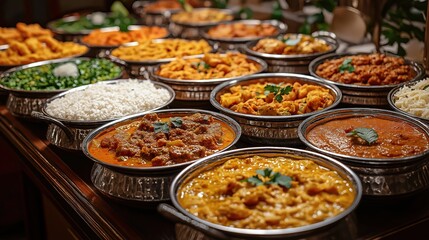
- Market growth is robust: the India foodservice & catering market is growing strongly and will continue to expand through the decade.
- Sustainability is now a baseline: eco-practices, local sourcing, and waste reduction are no longer optional; customers expect them.
- Weddings & experiential events remain a high-margin growth engine, but menus are shifting toward plant-forward, regional and fusion formats.
- Corporate & contract catering is scaling quickly — driven by GCCs, multi-site offices, and long-term B2B contracts. Large operators are expanding headcount in India.
- Technology & supply-chain innovation — from dark-store quick commerce to kitchen automation and ordering platforms — will separate winners from laggards.
If you only act on three things this year: adopt measurable sustainability practices; digitize ordering + inventory; and design plant-forward, locally anchored menus — you’ll be in front of most competitors.
The global foodservice industry and the Indian market are both on long-term growth trajectories, supported by urbanization, rising disposable income, and a rebound in events and travel. Recent market reports estimate strong growth in India’s foodservice sector and project multi-year growth across catering verticals.
- Pent-up event spending after pandemic restrictions has turned into resumed wedding seasons, corporate conferences, and large outdoor events.
- Changing customer values: buyers now want healthy, sustainable, and meaningful experiences rather than purely ostentatious spreads.
- B2B contracts & multi-day events: enterprise clients (GCCs, technology hubs, manufacturing sites) are signing longer catering contracts that stabilize demand.
Implication: Diversify revenue across weddings, corporate programs, and institutional contracts to smooth seasonality.
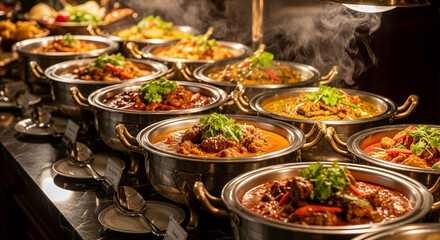
Weddings still represent a disproportionately high revenue pool for caterers. But how couples spend is shifting:
- Experiential menus (theme counters, immersive food narratives, regional pride dishes).
- Sustainable choices (local produce, compostable serveware) replacing momentary extravagance.
- Fusion and micro-experiences: small experiential stations (mocktail bars, artisanal dessert corners) that guests remember.
- Authenticity (regional food that tells a story)
- Inclusivity (wellness, vegan and allergen-friendly options)
- Clean logistics (on-time hot food, separate veg/non-veg flows)
Actionable moves:
- Offer tiered experiential packages (regional, fusion, premium-experience).
- Build a “sustainable wedding” package template with measurable waste metrics and local-sourcing stories.
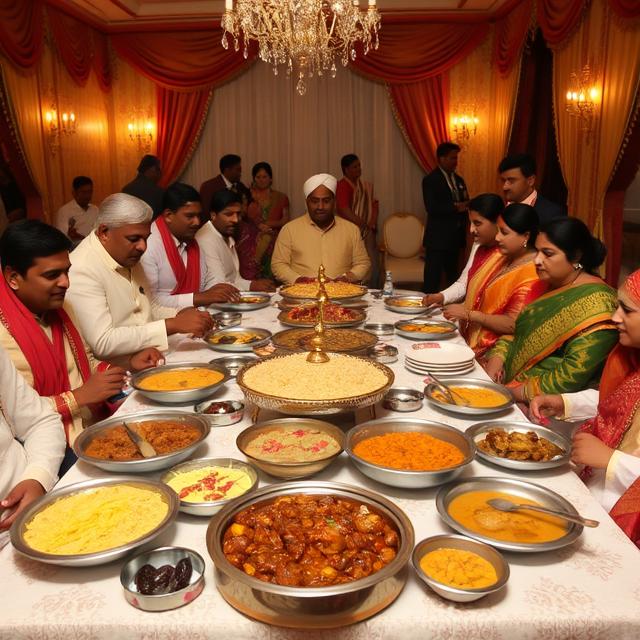
A major growth vector is the institutionalization of corporate catering. Global operators and large domestic groups are expanding their India footprint to serve GCCs and multinational campuses — a sign that steady, recurring revenue is available for operators who can meet compliance and scale requirements.
- Nutrition & wellness: wellness menus, calorie-labelled options, and allergen-aware choices.
- Digital experience: app-based ordering, pre-orders, meal analytics.
- Compliance & data: FSSAI compliance plus audit trails for corporate procurement teams.
Actionable moves:
- Build simple portal for corporate clients (menu scheduling, per-shift headcounts).
- Offer analytics dashboards showing cost per plate, waste percentages, and nutritional breakdowns.
- Local sourcing to reduce food miles and support farms.
- Plant-forward menus and millets to lower carbon footprint and provide nutritious alternatives.
- Zero-waste planning: portion analytics, donation partnerships, and composting.
- Eco serviceware: areca plates, terracotta, stainless reusables.
Sustainability can reduce procurement cost volatility (by sourcing locally), improve brand value, and open premium pricing for eco-conscious buyers. Regulators and large buyers increasingly require sustainability commitments in contracts.
Actionable moves:
- Publish a short “Sustainability Promise” with measurable KPIs (e.g., % local produce, waste diversion rate).
- Pilot composting or food-donation partnerships to reduce landfill waste.
- Plant-forward as default: not just for vegetarians — it’s now table-staple for health-minded guests.
- Regional revival: guests increasingly want regional pride dishes (e.g., Hyderabadi, Telangana, coastal specialties) presented with modern plating.
- Global-local fusion: sushi-idli fusion, naan-tacos, and millet risottos show up on 2025 menus.
Actionable moves:
- Curate a rotating seasonal menu that highlights local farmers’ produce.
- Create a “regional stories” menu: small cards at food counters explaining origin and ingredient sourcing to increase guest engagement.
- Ordering & subscription tech for office lunches and multi-day events.
- Kitchen automation & cloud-kitchen models for scalable prep and consistent quality.
- Quick-commerce and dark stores impact catering supply — faster ingredient replenishment and emergency orders are now possible.
- Real-time inventory systems avoid overbuying (reducing waste) and automate reorder thresholds.
- Use of analytics for portioning: predict leftovers based on guest demographics and past consumption.
Actionable moves:
- Integrate a basic inventory + ordering system (even off-the-shelf SaaS) to reduce spoilage.
- Partner with dark-store networks or local aggregators for last-mile ingredient gaps.

- Commissary / central kitchens allow for culinary consistency and faster scaling across venues.
- Subscription lunch models for corporates or institutional sites provide predictable cash flows.
- Hybrid event models: partial on-site cook, partial pre-cooked & recombined onsite.
- Meal kits for guests to take home (branded, sustainable packaging).
- Catering-as-a-service for smaller venues via marketplaces.
Actionable moves:
- Explore a subscription service for nearby corporate clusters (predictable weekly menus, advance payment).
- Build modular kits for small events during low-season.
Labour shortages and rising expectations for professionalism require investment in training, retention, and technology that reduces dependency on large manual teams. Large operators are increasing headcount strategically while investing in training and compliance.
- Front-of-house hospitality training for event teams
- HACCP & FSSAI certifications for kitchen staff
- Cross-training for mobile kitchens and live counters
Actionable moves:
- Create a simple training module for staff focused on hygiene, guest etiquette, and zero-waste practices.
- Use scheduling software to optimize staff rosters and reduce overtime expenses.
- Ingredient inflation and logistics costs remain a pressure point. Market data suggests price sensitivity among consumers.
- Yet premium experiential events and sustainability bundles can secure higher margins.
- Menu engineering: highlight higher-margin seasonal items.
- Portion optimization: reduce waste without shrinking perceived value.
- Operational efficiency: centralize prep, reduce last-minute onsite cooking when possible.
Actionable moves:
- Run monthly margin reviews by event type (wedding, corporate, industrial).
- Test a “local seasonal” menu with higher margins and measure guest satisfaction.
Hygiene and traceability remain central. FSSAI compliance, transparent ingredient provenance, and visible hygiene actions (gloved staff, temperature control) build trust and reduce risk.
Actionable moves:
- Display a simple kitchen compliance badge on proposals and websites.
- Offer clear allergen menus and ingredient lists for corporate clients and wedding planners.
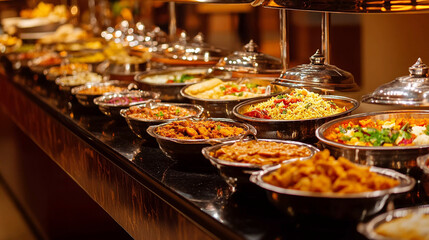
Local food culture and supply chains shape opportunity. Cities with strong wedding economies (like Hyderabad) combine high-value wedding demand with growing corporate catering markets, making them ideal for two-pronged growth strategies. Hyderabad operators that emphasize regional dishes (Telangana cuisine, Hyderabadi biryani variants), seasonal millet menus, and eco-packaging are winning local mindshare and repeat business.
Actionable moves for Hyderabad operators:
- Build a “Hyderabad regional” menu set that can be upsold to bridal families.
- Partner with Hyderabad-based farms for millets and seasonal veg to build a local-sourcing story.
Investors are focused on:
- Repeatable revenues (subscriptions, contracts)
- Scalable operations (commissaries, tech-enabled ordering)
- Strong unit economics and sustainability KPIs
Strategic partners (hotels, event venues, corporate procurement) seek proven experience, compliance, and digital integration.
Actionable moves:
- Prepare a one-page operations deck showing unit economics for a commissary model.
- Track sustainability KPIs (kg waste diverted, % local produce) to present to corporate buyers.
- Launch a “sustainable weddings” package with clear waste & sourcing KPIs.
- Offer corporate subscription lunches with digital pre-ordering and meal analytics.
- Pilot a commissary / cloud-kitchen approach for consistent offsite prep.
- Integrate inventory & supplier dark-store partnerships for faster restocks.
- Train staff on zero-waste service and allergy-safe practices to differentiate.
- Commodity shocks: sudden price increases in key ingredients.
- Labor shortages: the operational backbone can be fragile without training.
- Greenwashing: consumers will detect inauthentic sustainability claims. Be transparent and measurable.
- Competition from big players: large global caterers are expanding (watch their pricing and compliance playbooks).
- Year 1: Standardize operations, launch sustainability pilot, digitize ordering/inventory.
- Year 2: Scale corporate subscriptions and commissary output; refine menu engineering for margins.
- Year 3: Expand regionally via franchise or satellite commissaries; invest in brand story and verified sustainability metrics.
The catering industry in 2025 combines age-old fundamentals (taste, timing, hygiene) with new imperatives (sustainability, tech, data). Operators who adapt — by making sustainability measurable, digitizing core processes, and designing regionally resonant yet plant-forward menus — will capture the most profitable, least volatile revenue streams. Weddings remain a high-value market if you can offer experiential menus and verifiable sustainability; corporate contracts provide stable growth if you can meet compliance and tech needs. Combine both, and you have a resilient business model.
