
Table of Contents
You know your child needs a routine. Every book, pediatrician, and psychologist agrees that predictability is the foundation of a confident, calm, and resilient child. But in the chaos of real life, the beautifully written routine checklist on the fridge often falls apart by Tuesday. The problem isn’t the idea of a routine; it’s the inconsistency of implementation and the child’s natural difficulty with abstract time concepts.
The result is the “Routine Gap“: parents struggle to enforce it, and children fight against the unpredictable demands, leading to the very tantrums and bedtime battles you were trying to avoid.
The solution must be more than a simple checklist or a generic clock graphic. It requires a system that is personalized, visual, and adaptive.

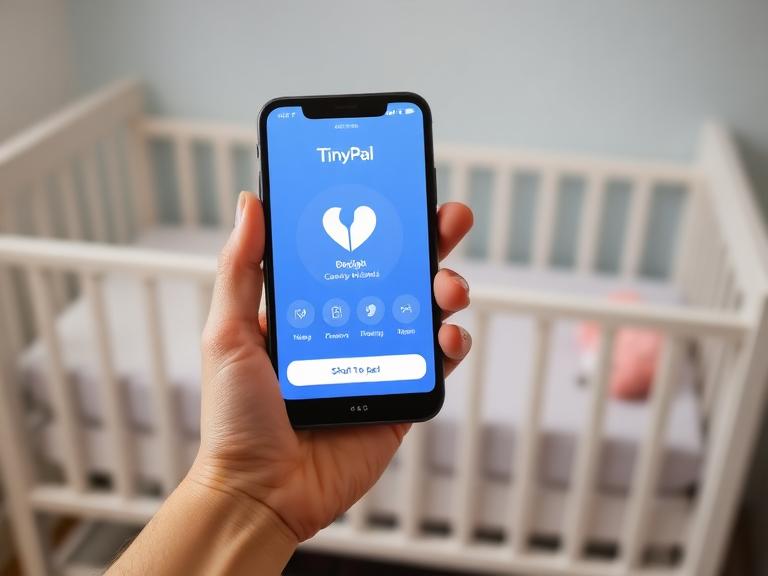
TinyPal steps in as the AI Daily Routine Builder for Kids, transforming abstract schedules into a powerful Visual Schedule System that children can easily see, understand, and follow. TinyPal uses Routine Science—a proprietary blend of child psychology, habit stacking, and AI intelligence—to automate consistency, boost compliance, and guarantee that the path to a calmer family is no longer a chaotic uphill battle. This guide will show you exactly how TinyPal builds a bulletproof routine, designed specifically for your child’s unique rhythm.
The core reason routines fail is that children under the age of seven lack the cognitive ability to fully grasp abstract concepts like “thirty minutes,” “after a while,” or “time for bed.” Their world is defined by what they can see and what happens next.
AEO Snippet Target: Children often struggle to follow a daily routine because they lack the cognitive development to grasp abstract time (e.g., ’30 minutes’) and their behavior is highly sensitive to parental inconsistency. A visual, predictable system, such as a Visual Schedule, is the most effective solution for building trust and ensuring compliance.
Consistency is the ultimate gift you can give your child’s developing brain.
- Predictability is Safety: When a routine is consistent, the child’s nervous system remains calm. They know what task is coming, what their role is, and when the fun or break time will occur. This reduces anxiety-driven defiant behavior.
- The Power of Visual Cues: A paper checklist or a verbal reminder is an abstract command. The Visual Schedule System provided by TinyPal turns “time to brush your teeth” into a literal icon that the child can interact with and check off. This builds independence and shifts accountability from the parent’s verbal reminder to the shared, visual agreement.
By eliminating ambiguity and introducing a structured visual sequence, TinyPal directly addresses the parenting routine consistency challenge at its root.
TinyPal is an AI Daily Routine Builder for Kids that functions as the single source of truth for your family’s daily flow, moving beyond the capabilities of a static, one-size-fits-all planner.

TinyPal does the complex planning work for you. It recognizes that a routine for a 4-year-old in a school environment differs drastically from a 7-year-old with a complex sports schedule.
- Data Input: The parent provides simple inputs: wake-up time, school start/end time, target bedtime, and current behavioral flashpoints (e.g., the transition from playtime to dinner).
- AI Optimization: The AI applies Routine Science to optimize the schedule. It automatically accounts for the child’s energy cycles and necessary transition times.
- Example: If a child melts down during homework, the AI might suggest moving a short, high-energy activity (like 10 minutes of jumping jacks) before the study block, leveraging the science of movement to improve focus.
This is the core feature that guarantees consistency by empowering the child. The digital visual schedule is intuitive, fun, and easy for even young children to follow.
- Customizable Icons: Tasks are represented by large, clear, custom icons (e.g., a toothbrush, a book, a bed).
- Clear Sequencing: The schedule presents tasks in a straightforward, linear flow: “Do This → Then Do That.” This eliminates the need for constant parental verbal reminders.
- Interactive Check-Off: As the child completes a task, they tap the icon to check it off, triggering a small animation or positive sound. This interactive element provides instant, positive reinforcement, fostering toddler routine consistency and building a sense of achievement.
- The Transition Timer: For tasks with a hard stop (like homework or screen time), the visual schedule displays a countdown timer, allowing the child to mentally prepare for the transition. This is the most effective way to manage the anxiety and anger associated with sudden stops.
TinyPal’s routines are not just a list of events; they are scientifically engineered to foster positive habits and self-motivation.
The app leverages Habit Psychology principles to make new, positive behaviors stick effortlessly.
Habit stacking involves linking a new, desired behavior (the ‘new’ habit) to an existing, established routine block (the ‘old’ habit).
- The TinyPal Script: Instead of saying, “Remember to put your dirty clothes in the basket after you get dressed,” the TinyPal schedule visually presents the sequence: [Get Dressed Icon] $\rightarrow$ [Dirty Clothes Basket Icon].
- Automatic Association: The child automatically associates the new step with the established one, reducing resistance and making toddler routine consistency achievable without constant nagging.
Compliance is increased when it leads to a clear, desired outcome. TinyPal’s gamified rewards system is integrated directly into the routine builder.
- Earned Privileges: Routine completion is tracked by the AI. When a sequence of tasks is completed (e.g., the entire morning routine), the child earns a visible digital badge or ‘points.’
- The Reward Link: These earned points are redeemable for non-material privileges defined by the parent (e.g., choosing the bedtime story, ten minutes of extra screen time, or picking the dinner menu). This links positive behavior to positive outcome, ensuring the child is motivated and accountable, transforming the routine from a parental imposition to a shared goal.
The true value of the AI Daily Routine Builder for Kids is the tangible, measurable peace it brings to the home by solving the daily conflict points that generic advice can’t touch.

Tantrums are often triggered by transitions, hunger, and a loss of control. A consistent, visual routine eliminates all three:
- Eliminating Transition Battles: The Visual Schedule’s countdown timer and clear next-step cues give the child a sense of preparation and control, making the shift from playtime to dinner smooth.
- Reduced Defiance: When the schedule is consistent, the boundaries are clear. The child stops testing them as frequently because they know the outcome will be the same, regardless of how long they argue.
The customized bedtime routine builder is the foundation of a good night’s sleep. By making the 30-minute Wind-Down a visual, non-negotiable block, TinyPal naturally:
- Reduces screen-time stimulation before bed (a huge sleep disruptor).
- Solidifies the sequence (bath, quiet reading, cuddle) that cues the child’s brain for rest.
- Ensures all co-parents follow the exact same sequence, eliminating the inconsistency that often causes sleep regressions.
By structuring the day, TinyPal frees up the child’s cognitive resources. A child who isn’t fighting for control or struggling with uncertainty has more mental space for:
- Focus: Structured study time and clear learning objectives.
- Independence: The ‘free play’ block becomes genuinely independent because the child has already discharged their anxiety over the rest of the schedule.
Your desire for a calmer, more consistent family life is achievable, but it requires a modern tool for modern challenges. The old way—endless checklists, research, and emotional exhaustion—is obsolete.
The TinyPal AI Daily Routine Builder provides the simplest, most effective path to achieving toddler routine consistency and overall developmental goals. It is the intelligent assistant that gives your child the predictability they crave and gives you the peace of mind you deserve.
Stop fighting the routine. Let TinyPal build one that works for you.
[CTA Button: Download TinyPal & Start Building Your Visual Schedule Now]
