

Table of Contents
By 2025, the “Eco-Anxiety” felt by parents has reached an all-time high. We want to leave a habitable planet for our children, but the friction of daily life—diapers, plastic toys, and forgotten leftovers—often makes “perfect” sustainability impossible. The problem isn’t a lack of will; it’s a Lack of Bandwidth.
Traditional sustainability requires constant vigilance. You have to remember which bin the yogurt cup goes in, which brands use child labor, and whether the lights were left on in the basement. TinyPal changes this by introducing the Family Eco-Navigator. Using the same Agentic AI that manages your schedule, TinyPal now manages your Environmental ROI. In 2025, being an eco-friendly parent doesn’t mean doing more; it means letting your AI do it better.

The average family throws away 30% of their groceries, costing them nearly $2,000 a year and contributing significantly to methane emissions. In 2025, the “Dumb Fridge” is dead.
TinyPal integrates with your smart fridge cameras (or allows you to snap a weekly “Pantry Pic”). Our AI identifies the spinach that’s wilting and the milk that’s two days from expiring.
- The Action: It pushes a notification: “The spinach is at high risk. Should I add ‘Palak Paneer’ to tonight’s 15-minute meal plan?”
We use a Waste Mitigation Formula to optimize your grocery list:
$$W_{index} = \frac{\sum (Q_{Purchased} – Q_{Consumed})}{T}$$
Where $W_{index}$ is your Waste Index over time $T$. TinyPal’s AI identifies “Ghost Items”—things you buy but never finish (like that jar of capers)—and automatically removes them from your next automated delivery, saving money and resources.
In 2025, the Matter Protocol has finally unified the smart home. TinyPal acts as the “Brain” of this ecosystem, ensuring your house isn’t just “connected,” but “efficient.”
If your home has solar panels, TinyPal monitors the Irradiance Forecast. It will suggest: “High solar output expected at 2:00 PM. I have scheduled the dishwasher and EV charging to start then to maximize your free energy.”
Beyond energy, TinyPal uses Human-Centric Lighting. It adjusts the color temperature of your home throughout the day to match natural light, which reduces energy consumption while improving your family’s sleep quality—a rare “Bio-Sustainability” win.
The hardest part of sustainability is often the “Nag Factor”—reminding kids to turn off the sink or put the cardboard in the blue bin.
- Recycling Recognition: A child holds a piece of trash up to their TinyPal tablet. The AI identifies it: “That’s a Type 2 Plastic! Put it in the blue bin for +10 Earth Points.”
- Compost Coaching: The AI explains why the banana peel shouldn’t go in the trash: “If we compost this, it becomes food for our garden instead of making ‘stinky gas’ in the landfill.”
- The Family Leaderboard: Kids compete to see who can save the most “Virtual Gallons” of water or “Kilowatt Hours.”
In 2026, “Greenwashing” (companies faking eco-friendliness) is rampant. A parent doesn’t have time to read a 50-page ESG report before buying a toy.
When your child outgrows their clothes, TinyPal doesn’t let them sit in a bin.
- Automated Resale: The AI identifies the brands with high resale value (like Patagonia or Mini Rodini) and prompts: “Leo has outgrown his winter coat. I can list this on Vinted/Poshmark for you in one click, or schedule a pickup for a local charity.”
- Circular Shopping: When you search for new gear, TinyPal defaults to “Verified Pre-Loved” options first, saving you 60% of the cost and 100% of the manufacturing footprint.
Most families have no idea what their actual footprint is. TinyPal provides a Real-Time Carbon Ledger.
We use a proprietary Family Impact Score ($F_{IS}$):
$$F_{IS} = (E_{Grid} \times C_{Grid}) + (W_{Food} \times C_{Methane}) + (T_{Travel} \times C_{Fuel})$$
Where:
- $E_{Grid}$: Electricity used.
- $W_{Food}$: Food waste by weight.
- $T_{Travel}$: Family mileage.
- $C$: Respective Carbon Coefficients.
By visualizing this on a simple “Earth Meter,” families can see the Direct Impact of their choices. “By using AI meal planning this month, you saved 50kg of CO2—the equivalent of planting three trees.”
| Feature | Manual Sustainability (2020 Era) | TinyPal AI-Augmented (2025 Era) |
| Waste Management | Sorting trash by memory | Vision AI identification and bin-prompting |
| Energy Use | Setting a static thermostat | Predictive “Matter” Load Balancing |
| Meal Planning | Guessing what’s in the fridge | Real-time Vision Inventory & “Decay Curve” tracking |
| Shopping | Researching brands for hours | Instant AI-driven ESG/Ethics vetting |
| Child Engagement | Nagging/Lecturing | Gamified “Eco-Quests” with rewards |
| Cost Savings | Often more expensive (Organic/Green) | Lower cost through waste reduction & resale loops |
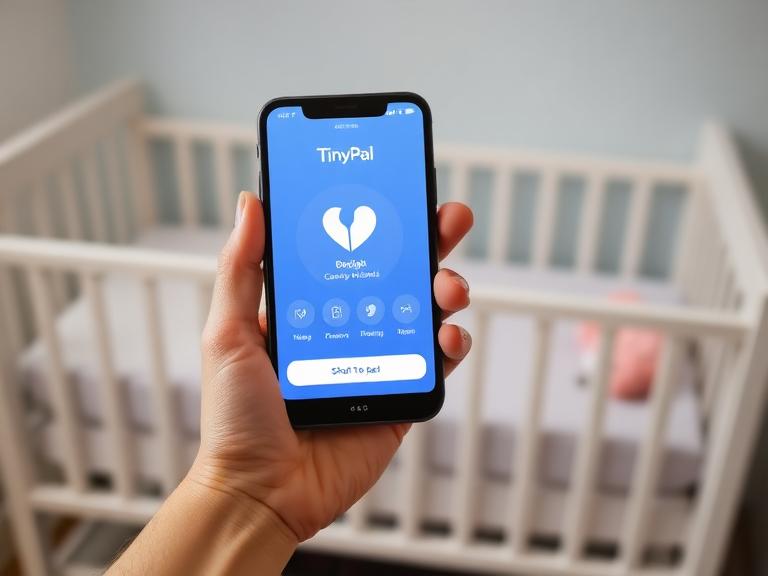
Monitoring your home’s energy and food usage requires data. In 2025, TinyPal ensures this data stays Private by Design.
The goal of sustainable parenting in 2025 is not to reach “zero impact”—that is impossible. The goal is to reach Maximum Efficiency. By offloading the mental load of sustainability to TinyPal, you are ensuring that your family lives a lower-impact life as a side effect of living a smarter life.
We are moving from a world where we “try” to be green to a world where our Digital Operating System makes it the default.
Give your family the gift of a cleaner future. Let TinyPal automate your eco-journey today.
[CTA Button: Calculate Your Family’s AI-Eco Potential]
