
Table of Contents
Modern parenting in the United States has entered a new dimension — one where AI technology meets emotional intelligence.
From tracking homework schedules to detecting stress through voice or typing tone, AI-powered parenting apps are now redefining how parents support children’s mental and emotional well-being.
But here’s the truth: technology is only as good as the intent behind it.
Parents must understand not only what AI can do — but also how it should be used responsibly.

In this blog, we’ll explore:
- What “AI emotional health” means for families in 2025
- How artificial intelligence interprets emotional cues in kids
- The science behind AI-based parenting apps
- How to choose emotionally safe technology
- And how TinyPal is setting a new ethical benchmark in this space
By the end, you’ll know exactly what to look for in an AI parenting tool — and how to protect your family’s trust while using one.
Emotional health refers to a child’s ability to recognize, express, and manage emotions positively.
In the digital world, where children spend nearly 7 hours daily online (as per Common Sense Media, 2024), emotional health is at risk from:
- Social media comparison anxiety
- Online bullying or exclusion
- Fear of missing out (FOMO)
- Sleep disruption due to screens
That’s why emotional monitoring through AI has become a growing field in digital parenting.
AI now helps parents understand subtle emotional signals — not by spying, but by interpreting behavioral data ethically.
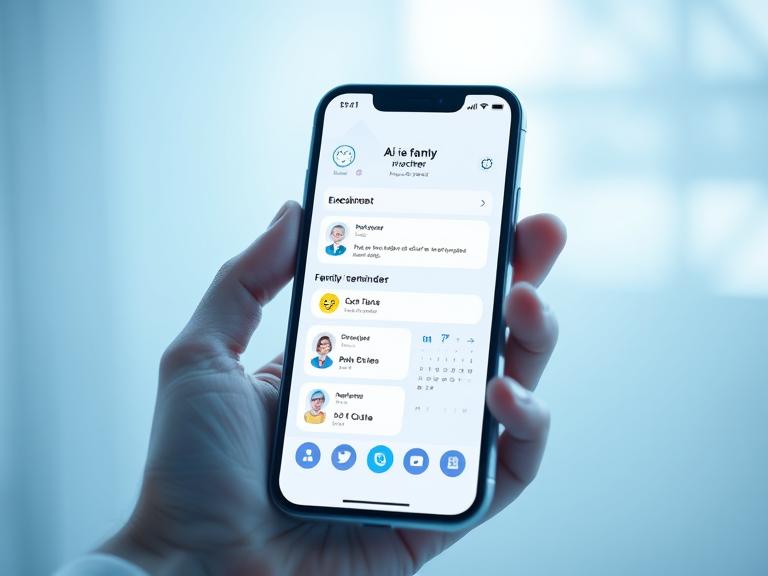
An AI-powered parenting app is more than just a tracker.
It uses machine learning, NLP (Natural Language Processing), and predictive analytics to identify emotional trends in a child’s daily activity.
These apps can:
- Analyze tone and mood in text messages (privately, with permission)
- Detect late-night usage patterns linked to anxiety
- Suggest screen-free routines for better mental balance
- Provide parents with gentle alerts when signs of emotional stress appear
But here’s the key difference: responsible apps use AI to guide, not control.
TinyPal, for example, uses contextual AI — meaning it doesn’t store or exploit your child’s data. Instead, it helps parents respond with empathy and understanding.
AI emotional analysis relies on three main layers:
- Data Recognition:
AI identifies communication patterns — like frequency of messages, word tone, or emoji use. - Sentiment Interpretation (NLP):
Using natural language models, it interprets words that express joy, stress, or sadness. - Behavioral Mapping:
It correlates emotional cues with screen time, sleep hours, and social engagement.
Example: If a child uses social apps late at night and their tone becomes more negative, AI can gently alert parents to check in — not punish.
Leading research from MIT and Stanford (2024) shows that AI-based emotional recognition can achieve up to 89% accuracy when ethically trained on diverse data sets.
In parenting apps, this means AI can:
- Spot early warning signs of emotional fatigue
- Help children self-regulate through gamified wellness challenges
- Assist in family communication improvement
- Offer personalized mental health tips
However, this only works when apps are developed with child psychology experts and transparent data protocols — not as surveillance tools.
It’s crucial to understand that AI doesn’t replace parental emotional intelligence (EQ).
Instead, it acts as a supportive mirror, reflecting behavioral trends parents might not notice.
| Comparison | Emotional Intelligence (Parents) | Artificial Intelligence (Apps) |
|---|---|---|
| Based On | Human empathy & observation | Data-driven behavioral analysis |
| Strength | Context, compassion, communication | Consistency, early detection |
| Limitation | Emotional fatigue | Lack of human context |
| Best Use | Personal connection | Supportive insights |
When used together — EQ + AI — parents create a complete picture of their child’s emotional world.
Not all AI apps are built equal.
Some free parenting tools harvest private messages, store photos, or even sell user data to third-party networks.
Parents must be alert for red flags such as:
- No clear privacy policy
- Data shared with advertisers
- Continuous microphone or GPS tracking
- Vague “research consent” checkboxes
Apps that truly prioritize emotional health (like TinyPal) follow:
✅ COPPA (Children’s Online Privacy Protection Act)
✅ FERPA (Family Educational Rights and Privacy Act)
✅ GDPR (General Data Protection Regulation)
TinyPal operates with Zero-Data-Tracking AI, meaning no personal messages or visuals leave the device — a standard that sets it apart.
Most parents worry about monitoring apps causing mistrust.
However, communication-based AI systems actually improve relationships when used right.
For example:
- A notification like “Your child’s tone indicates stress” opens a gentle conversation.
- Shared “well-being reports” encourage children to self-reflect.
- Built-in emotion check-ins create accountability and understanding.
Instead of surveillance, AI acts as a mediator for empathy.
A recent FamilyTech study (2025) revealed:
- 73% of U.S. parents said AI tools improved awareness of their kids’ emotions
- 61% reported reduced conflicts about screen use
- 48% said their child opened up more after using well-being apps
Real Parent Story (Austin, TX):
“I used to worry constantly about what my son was doing online. With TinyPal, I don’t need to check every message. The app gives me a summary that helps me talk to him, not track him.”
These insights show how the future of parenting is moving toward emotional literacy — not digital policing.
Before downloading any app, evaluate it based on the 5 Trust Pillars:
| Pillar | What to Check | Why It Matters |
|---|---|---|
| Privacy | Clear data policy, encryption | Keeps family data secure |
| Transparency | Explains AI model usage | Builds trust |
| Emotional Intelligence | Offers mood or stress detection | Encourages empathy |
| Parental Empowerment | Focuses on coaching, not control | Supports communication |
| Support Network | 24/7 assistance, expert insights | Reliable for long-term use |
TinyPal passes all five pillars — making it one of the few apps designed around emotional balance rather than digital policing.

TinyPal’s emotional intelligence engine doesn’t just analyze data — it understands context.
It looks at screen-time rhythms, text tone, and online fatigue indicators to guide parents proactively.
TinyPal’s Core Advantages:
- Emotionally aware AI engine
- Screen & sleep rhythm analysis
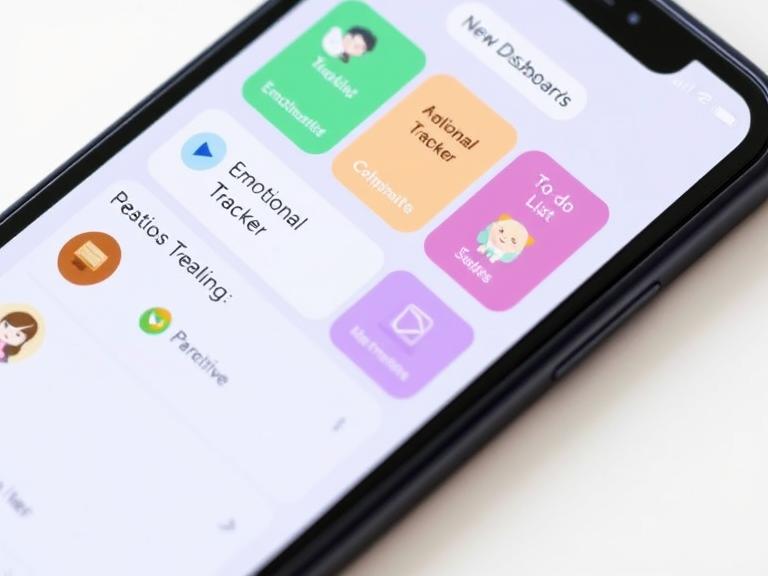
- Child-centered dashboard (not spy mode)
- Privacy-first structure with local data storage
- Cross-device syncing for mixed Android/iOS homes
Parent Review (California, 2025):
“TinyPal helps me raise emotionally aware kids. It’s not about catching them doing wrong — it’s about helping them stay well.”
This transparent, family-friendly AI approach is why TinyPal is trusted by thousands of American families.
By 2030, we’ll see the next leap in emotionally intelligent AI — where parenting apps will integrate with:
- Smart home wellness systems
- AI-assisted family therapy bots
- Predictive emotional burnout alerts
- Voice-tone analytics for real-time guidance
But one thing will remain constant: parents will always be the emotional core of their child’s growth.
AI will simply help them understand better, faster, and more compassionately.
The future of parenting isn’t about control; it’s about connection.
AI technology — when built with ethics, empathy, and expertise — can make families emotionally stronger, not distant.
Apps like TinyPal redefine what it means to care digitally. They don’t just track screens; they teach balance, mindfulness, and trust.
Because in 2025, the best parenting app isn’t the one that watches your child — it’s the one that helps you understand them.
